
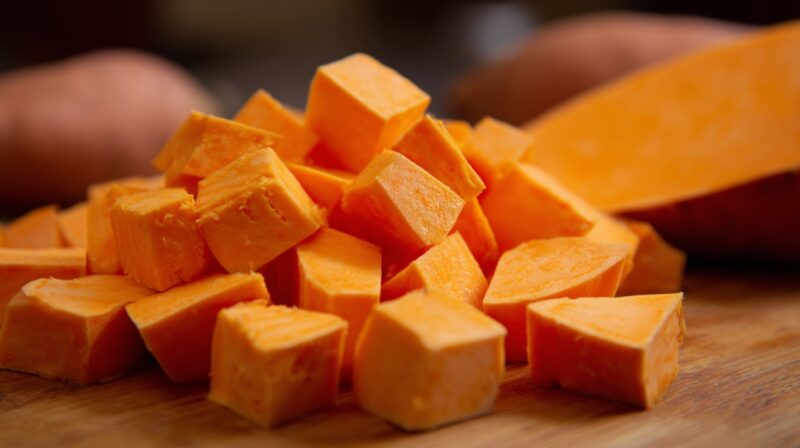
How to Peel and Cube Sweet Potatoes Ahead of Time (Meal Prep Guide)
Meal prep with sweet potatoes offers practical advantages for anyone managing a busy schedule. Preparing them ahead of time cuts down cooking time on weeknights and reduces daily decision fatigue around meals.
Having ready to use sweet potatoes available makes it easier to skip takeout and stick with balanced food choices.
Sweet potatoes deliver strong nutritional value. Fiber content supports digestion and satiety. Vitamin A plays a key role in immune and eye health. Vitamin C contributes to immune function. Manganese and potassium assist metabolism, nerve signaling, and muscle function.
Regular intake supports energy levels and overall wellness.
Versatility adds to their value. Sweet potatoes fit easily into grain bowls, tacos, salads, soups, and simple side dishes. One prep session can support many meals across an entire week.
Choosing and Storing Raw Sweet Potatoes
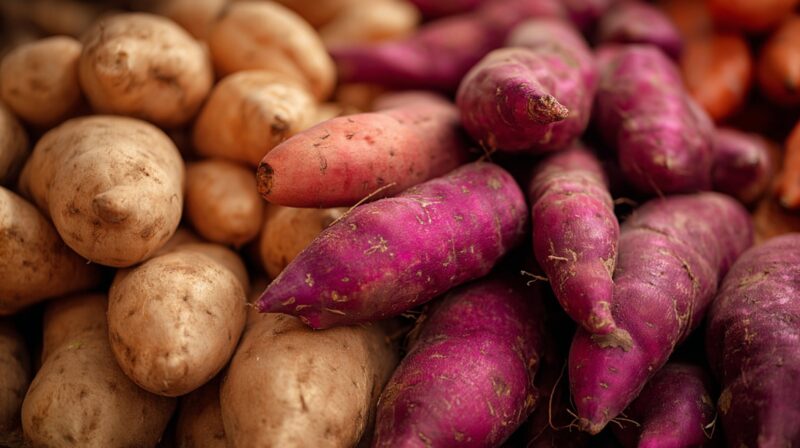
Selecting quality sweet potatoes directly affects taste, texture, and storage life. Fresh sweet potatoes feel firm when pressed and show smooth, unbroken skin. Visual inspection helps identify age and handling issues.
- bruised areas that feel soft
- wrinkled or shriveled skin
- visible sprouts or mold
Uniform sizing plays a practical role during prep. Similar sized potatoes cook at the same rate and reduce trimming waste. Small to medium sweet potatoes remain easier to handle, faster to peel, and simpler to portion for weekly meals.
Storage environment strongly influences final texture. Cold temperatures damage cell structure and lead to dense, hard centers after cooking.
Refrigeration should be avoided. A cool, dry, and dark location supports proper curing and moisture balance.
Ideal storage conditions fall within a narrow temperature range of 55 to 60 degrees Fahrenheit. Proper storage allows raw sweet potatoes to remain usable for up to three weeks without flavor loss.
Tools and Supplies Needed
Efficient prep relies on simple, reliable kitchen tools. Each item supports safety, speed, and consistency during cutting and storage.
- a vegetable peeler or small knife for skin removal
- a sharp chef’s knife to prevent slipping and uneven cuts
- a large cutting board for stability
- a large bowl for soaking or seasoning
- airtight containers or zip bags for storage
- parchment paper for roasting and easy cleanup
Optional tools still add value. A scrub brush improves cleanliness, especially when skins remain intact. Dirt removal before cutting lowers food safety risk and prevents grit from affecting final texture.
Step-by-Step Peeling and Cubing Sweet Potatoes
Now, let us go through the process, step-by-step.
1. Wash Thoroughly
Sweet potatoes should be rinsed under running water and scrubbed on all sides. Soil and bacteria cling tightly to skin and spread during cutting. Washing remains necessary even when peeling afterward. Skipping this step increases contamination risk and compromises kitchen safety.
2. Peel the Sweet Potatoes Optional
Peeling depends on recipe texture and preference. A vegetable peeler or paring knife works well. Skin stays edible and nutrient dense.
- up to 25 percent more fiber per serving
- improved digestion support
- increased satiety
Boiling offers another option, since skin loosens naturally after cooking and can be removed with minimal effort.
3. Cube Like a Chef
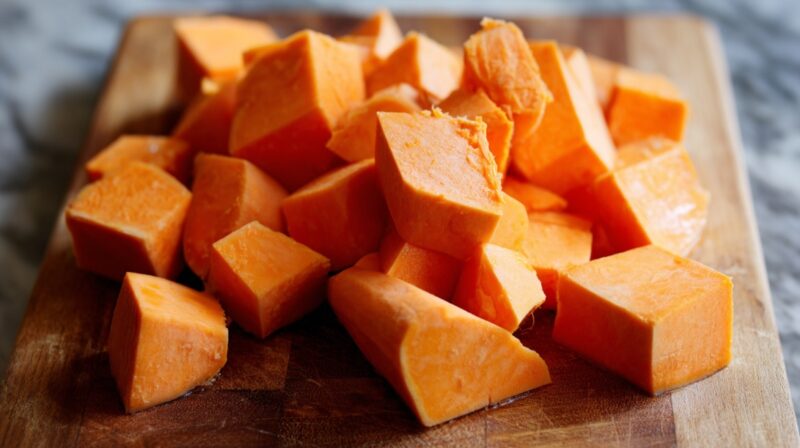
Preparation begins by trimming both ends to create flat surfaces. Stability improves knife control and reduces slipping. Potatoes should be sliced lengthwise, then cross-cut into evenly sized cubes measuring roughly three-quarters to one inch.
Uniform size ensures consistent cooking and balanced texture.
Professional technique improves results. Cutting large sections into rectangles before cubing increases precision and control. Soaking cubes in cold water for about 30 minutes remains optional.
Starch removal supports better browning and crispness during roasting.
Cooking Methods for Meal Prep
Cooking method selection influences texture, flavor development, and nutrient retention. Choice should match planned recipes and desired outcomes.
1. Roasted Cubes Best for Crisp Edges
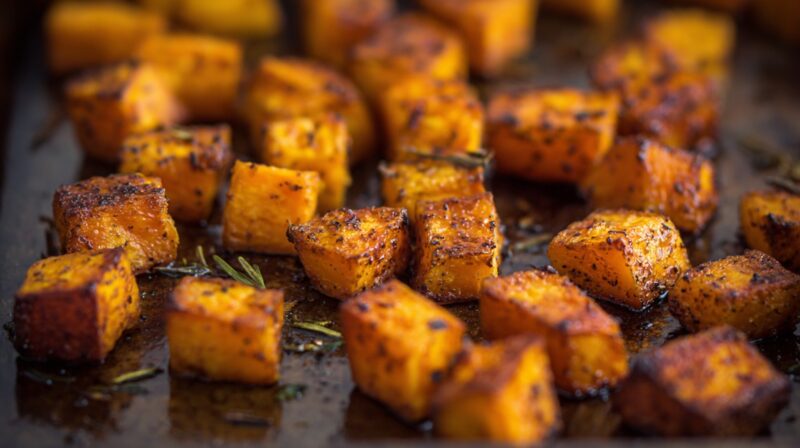
Oven temperature should reach 425 degrees Fahrenheit. Cubes can be tossed with oil, salt, pepper, and optional spices like paprika or garlic powder. Avocado oil performs well at high heat.
Potatoes should sit in a single layer on a parchment lined baking sheet. Overcrowding causes steam buildup and softens edges. Roasting typically takes 25 to 35 minutes, with flipping halfway to promote even browning.
2. Boiled Cubes Best for Soups and Mashing
Cubed potatoes should start in cold water with a small amount of salt. Gradual heating supports even doneness. Simmering for 20 to 25 minutes produces fork tender results. Immediate draining prevents water absorption.
Overboiling leads to texture breakdown and nutrient loss, particularly vitamin C.
Make recipies like chickpea and sweet potato cutlets faster and easier!
3. Baked Whole or Halves Good for Stuffing or Mashing
Whole potatoes should be washed and pierced several times with a fork to release steam. Cutting lengthwise remains optional. Baking works well at 400 degrees Fahrenheit for 45 to 60 minutes.
Cooling before handling protects texture and prevents burns. Light oil rubbed onto skin improves flavor and surface crispness.
4. Sweet Potato Fries Kid Friendly and Snackable
Thin matchstick cuts promote crisp results. Even thickness allows consistent cooking. Fries should be tossed with olive oil, salt, garlic powder, and paprika.
Roasting at 425 degrees Fahrenheit for about 20 minutes works best, with flipping halfway through. Cooling completely before storage prevents trapped moisture and soggy texture.
5. Microwave Method Quickest Option
Whole potatoes should be washed and pierced before cooking. Placement on a microwave safe plate allows even heating. Cooking time ranges between 5 and 8 minutes on high, with flipping halfway.
Resting time allows steam to finish softening interior flesh. Nutrient retention remains high with this method, with beta carotene levels staying near 90 percent, making it effective for fast, nutrition focused prep.
Closing Thoughts
Prepping sweet potatoes ahead of time reduces stress, saves money, and streamlines weekly meals.
Consistent access to prepared vegetables supports healthier eating habits and simplifies planning. Multiple cooking options allow flexibility across many recipes.
Mastery of basic prep techniques turns sweet potatoes into one of the most reliable and rewarding meal prep staples available.
Read more: Learn how to make homemade crispy potato chips with ease!

Hello, my name is Marina Vlasov. Im currently trying to change my career from my current job to becoming a chef. It is a hard road, but I feel like im coming there soon. While I enjoy preparing practically all food, from various cuisines from all over the globe, I must say that I mostly enjoy preparing vegan food. That is my strongest side. That is why I want to provide you with the best vegan food recipes on this blog of mine.