
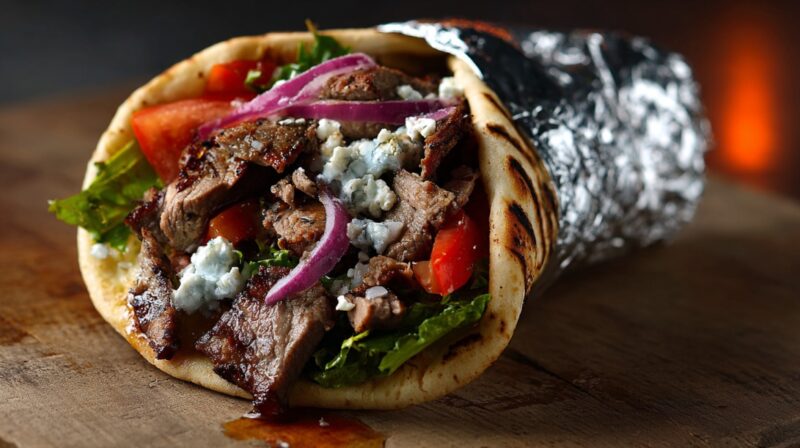
Is a Gyro Healthy? What to Know About Meat, Pita & Tzatziki Calories
Gyros remain a popular Mediterranean meal built around seasoned meat, soft pita bread, creamy tzatziki, and fresh vegetables.
- Calories
- Fat
- Sodium
Health value depends largely on ingredient choices, portion size, and preparation methods. A closer look at each component helps clarify how a gyro fits into a balanced diet.
Is Gyro Meat Healthy? Pros and Cons
The health value of gyro meat depends on the meat choice, preparation quality, and frequency of consumption.
Protein content and savory flavor make gyro meat filling and satisfying, yet fat and sodium levels require attention. Balanced intake and mindful pairings determine how well gyro meat fits into a long-term eating pattern.
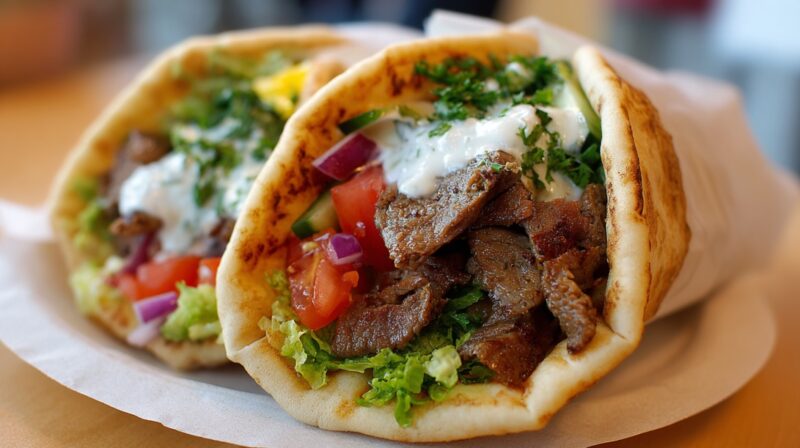
Pros
High protein intake supports muscle maintenance, appetite control, and steady energy levels. Gyro meat delivers complete protein along with key micronutrients that support daily function.
Seasoning with herbs and spices adds depth of flavor, which often reduces reliance on heavy sauces or added fats.
*Several nutritional strengths stand out in gyro meat choices:
- Protein levels often range between 20 and 26 grams per serving, depending on the meat type
- Iron supports oxygen transport and helps prevent fatigue
- Vitamin B12 supports nerve health and red blood cell production
Low carbohydrate content makes gyro meat compatible with keto and low-carb eating styles when bread and fries are excluded. Satiety remains high due to protein and fat, helping reduce snacking later in the day.
Rotisserie cooking also allows excess fat to drip away during preparation, improving texture and taste without added oils.
Cons
Potential downsides appear when gyro meat relies heavily on lamb or beef and is consumed often without balance.
Saturated fat intake may rise quickly, especially with larger portions or processed versions. Sodium levels also tend to increase in commercial or pre-made gyro meat.
Several factors contribute to these concerns:
- Lamb and beef contain higher saturated fat, which may raise LDL cholesterol
- Processed gyro meat can include preservatives and high sodium levels
- Combined calories increase rapidly once pita, sauces, and fried sides enter the plate
Calorie density becomes an issue when gyro meat pairs with refined bread, creamy sauces, and fries.
Frequent intake under those conditions may strain heart health over time. Portion control and leaner protein choices play a critical role in minimizing these risks.
Gyro meat works best as part of a balanced meal that emphasizes vegetables, lighter sauces, and thoughtful portion sizes.
Nutritional Breakdown of Gyro Components
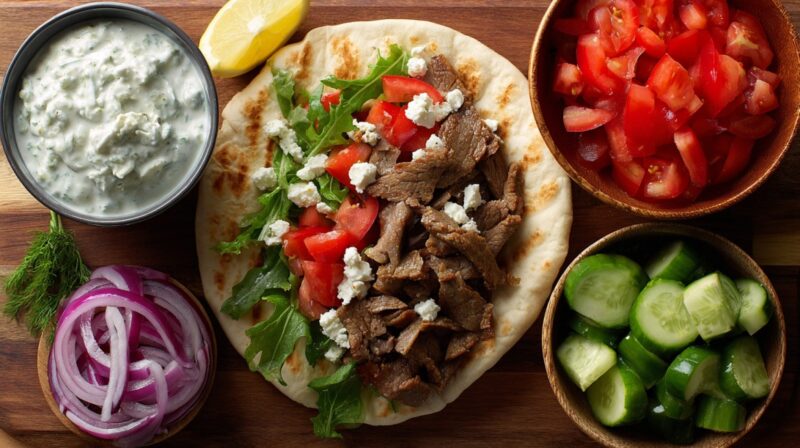
Careful evaluation of a gyro starts with its individual ingredients. Each component contributes calories, macronutrients, and health benefits in different ways. Choices made at each step determine how light or calorie dense the final meal becomes.
Gyro Meat
Gyro meat forms the foundation of the dish and supplies most of its protein and calories. Meat selection and preparation method heavily influence fat content, sodium levels, and overall nutritional value.
Composition and Preparation
Traditional gyro meat relies on a combination of lamb and beef that gets finely ground, seasoned, and shaped for slow roasting. Many modern menus also include chicken or turkey options designed for lighter eating patterns.
Marinades rely on herbs and spices such as oregano, thyme, garlic, cumin, pepper, and salt, creating strong flavor without heavy sauces.
Vertical rotisserie cooking plays an important role in texture and fat control. Constant rotation exposes meat evenly to heat while allowing rendered fat to drip away. Moisture stays locked in due to steady motion, which limits the need for added oils or butter.
Preparation quality varies depending on sourcing. Freshly carved meat prepared in house often contains fewer additives. Commercially produced gyro cones may include extra ingredients intended to improve consistency and shelf stability, including fillers and preservatives.
Calories and Macronutrients
Calorie and macronutrient values shift noticeably based on meat choice. Common nutritional figures help illustrate those differences.
- Lamb provides about 217 calories per 100 grams with roughly 26 grams of protein and 11 grams of fat, while containing no carbohydrates
- Beef and lamb mixes average 350 to 400 calories per four-ounce serving, with 20 to 25 grams of protein and similar amounts of fat
- Chicken gyro meat delivers about 142 calories per three ounces, offering high protein with far less fat
- Turkey based gyro meat follows a similar lean profile, making it attractive for calorie-conscious diets
Small carbohydrate amounts may appear in processed meats due to seasoning or binders.
Saturated Fat and Cholesterol
Lamb and beef contain higher saturated fat levels compared to poultry. Regular intake of fatty cuts can raise LDL cholesterol over time, especially when portions remain large.
Pre-made gyro meat often carries elevated sodium levels, particularly in fast food or frozen products. Sodium intake can rise quickly once sauces and bread get added.
Protein and Key Nutrients
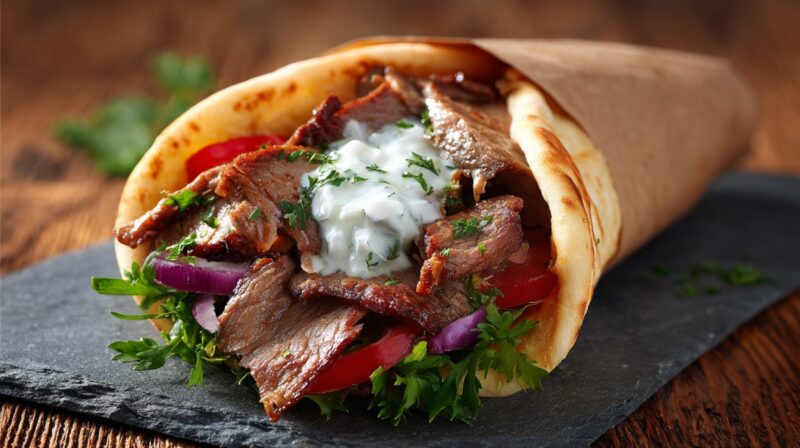
Gyro meat supplies complete protein that supports muscle repair, fullness, and metabolic health. Iron supports oxygen transport in blood cells, while vitamin B12 contributes to nerve health and energy production.
Low carbohydrate content makes gyro meat suitable for keto and low carb eating styles when bread and starchy sides stay off the plate.
Comparison With Other Meats
Protein sources vary widely in calorie density and fat content, making comparisons useful during meal planning.
Chicken breast offers about 137 calories per four ounces with roughly 21 grams of protein and only 5 grams of fat
Lamb delivers more calories and fat per ounce while offering slightly higher protein density
Lean poultry options significantly reduce overall calorie load in a gyro meal
Pita Bread
Pita bread shapes the structure of a traditional gyro but also adds a substantial carbohydrate load. Bread choice and portion size strongly affect blood sugar response and total calorie intake.
Calories and Carbohydrates
White pita bread contributes about 170 calories per serving along with roughly 35 grams of carbohydrates.
Refined grains digest quickly, which may lead to shorter satiety compared to fiber rich options. Oversized pitas or double wraps can push calorie totals much higher than expected.
Healthier Options
Whole wheat or whole grain pita adds fiber and micronutrients that support digestion and steadier blood sugar levels. Fiber also promotes fullness, helping reduce overeating later in the day.
Removing pita entirely and choosing a salad base preserves gyro flavors while cutting carbohydrates, which supports weight loss and low carb goals.
Tzatziki Sauce

Sauce selection often determines how heavy or light a gyro feels. Tzatziki offers creaminess with fewer calories than many alternatives.
Ingredients and Calories
- Greek yogurt
- Cucumber
- Garlic
- Lemon juice
- Small amounts of olive oil
- Herbs
Portion size and yogurt fat level affect calorie count, which usually falls between 32 and 50 calories per serving. Compared to creamy sauces, calorie contribution remains modest.
Nutritional Benefits
Greek yogurt supplies protein and probiotics that support digestive health. Lower fat yogurt versions maintain flavor while reducing calories. Tzatziki serves as a lighter option compared to mayonnaise based sauces that often carry higher fat and added sugar levels.
Vegetables and Add-Ons
Vegetables bring freshness, texture, and nutritional balance to a gyro. Higher vegetable portions can significantly improve meal quality without adding many calories.
Nutritional Contribution
Common vegetable additions contribute vitamins, antioxidants, and hydration while keeping calorie counts low.
- Cucumbers add hydration and about 45 calories per serving
- Onions contribute around 64 calories, along with beneficial plant compounds
- Tomatoes supply roughly 32 calories while delivering vitamin C and antioxidants
Role in Meal Balance
Fresh vegetables increase volume and crunch, helping balance heavier elements like meat and bread. Fiber content supports digestion and enhances satiety, making the meal feel more filling without excess calories.
Summary
Gyros can fit into a healthy eating pattern with mindful choices. Lean meats, whole-grain bread, and fresh vegetables make a meaningful difference.
Frequent overuse of sauces and refined carbs can quickly push calories higher.
Balance, moderation, and smart substitutions allow gyros to remain a satisfying and protein-focused meal option.
For vegan options, you can use soy sauce!

Hello, my name is Marina Vlasov. Im currently trying to change my career from my current job to becoming a chef. It is a hard road, but I feel like im coming there soon. While I enjoy preparing practically all food, from various cuisines from all over the globe, I must say that I mostly enjoy preparing vegan food. That is my strongest side. That is why I want to provide you with the best vegan food recipes on this blog of mine.