
How to Cook King Oyster Mushrooms – Pan Seared, Grilled, and Roasted Recipes
King oyster mushrooms cook well when they are treated like a solid protein rather than a delicate vegetable. Their dense stems need strong heat, space, and time to brown before seasoning.
When cooked correctly, they develop a deep savory flavor, a firm but tender bite, and a structure that works just as well sliced thick as it does pulled into strands. Pan searing, grilling, and roasting each bring out a different side of the mushroom, but all three rely on the same core rules.
The reason king oyster mushrooms behave differently from most mushrooms is their structure. Unlike button or shiitake mushrooms, the edible part is primarily the stem, not the cap. That stem is dense, layered, and naturally fibrous. It holds moisture tightly, which is why weak heat produces spongy results.
When you cut a king oyster mushroom lengthwise, you can see the fibers running from top to bottom. Those fibers soften only after moisture escapes and browning begins. This is why patience and heat matter more than oil or seasoning.
Preparation That Prevents Rubberiness
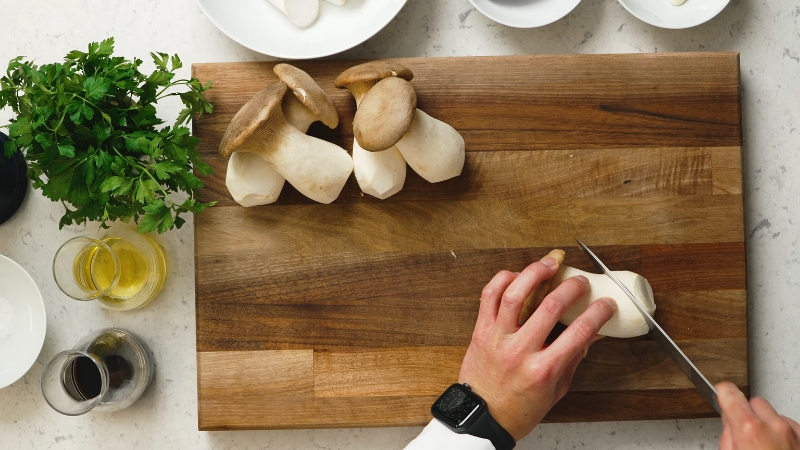
Before any cooking method, preparation determines the outcome. Start by trimming off the dirty base. The caps can be cooked, but most texture comes from the stem.
A brief rinse is fine if needed, but drying is essential. Any surface moisture delays browning.
For thicker mushrooms, slicing lengthwise into slabs about 1.5 to 2 centimeters thick works best. For shredded or pulled textures, scoring and tearing along the grain creates strands that behave like meat fibers during cooking.
Cut Style
Best Use
Texture Result
Thick slabs
Searing, grilling
Meaty, steak-like
Lengthwise strips
Stir fry, tacos
Tender, fibrous
Pulled chunks
Sauces, fillings
Juicy, structured
Pan Seared King Oyster Mushrooms
Pan searing produces the deepest flavor in the shortest time, but only if the pan is hot and uncrowded.
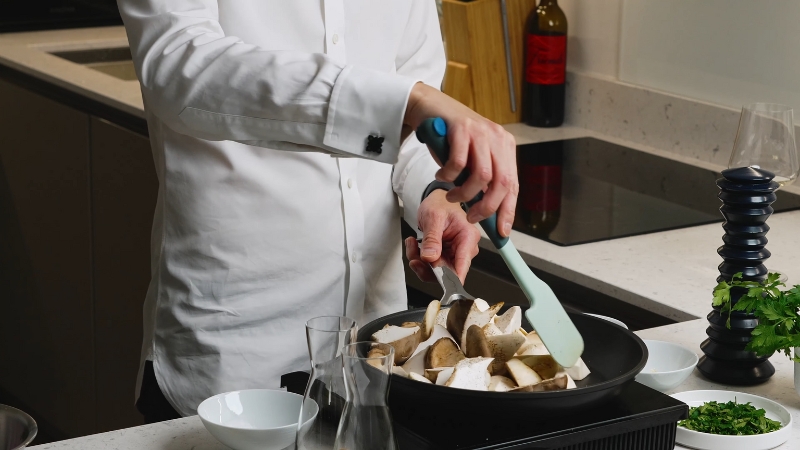
Heat a heavy pan until the oil shimmers clearly. Place the mushroom pieces in a single layer. They should sizzle immediately. Do not move them for the first two to three minutes. Early movement prevents crust formation.
During the first stage, the mushrooms release moisture and look dry at the surface. This is normal. Browning begins only after that moisture evaporates.
Flip once and repeat. Season only after both sides have developed color.
Pan Condition
Result
Cool pan
Steaming, pale surface
Crowded pan
Watery texture
Hot pan, space
Deep browning
Finish with a small amount of butter or oil and aromatics if desired. Garlic or herbs go in at the end to avoid burning.
Grilling King Oyster Mushrooms
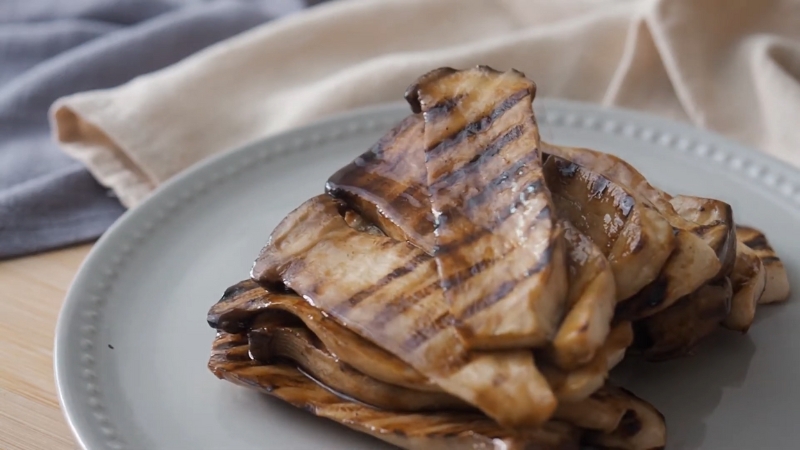
Grilling highlights the mushroom’s natural umami and adds smokiness, but it also exposes weaknesses in prep.
King oyster mushrooms must be brushed lightly with oil before grilling. Dry surfaces stick and tear.
Use medium-high heat and place mushrooms directly over the grill. Grill marks form quickly, but full cooking takes longer than most people expect. Turn only once if possible.
Grilling works best with thicker cuts. Thin slices dry out too fast.
Grill Stage
What to Watch
First contact
Immediate sizzle
Mid cook
Visible moisture evaporation
Final stage
Flexible, browned texture
If flare-ups occur, move the mushrooms briefly off direct heat. Burning does not equal browning.
Roasted King Oyster Mushrooms
View this post on Instagram
Roasting is the most forgiving method, especially for larger batches. High, dry heat allows moisture to escape evenly.
Preheat the oven fully. Toss mushrooms lightly with oil and spread them in a single layer. Overlapping causes steaming.
Roast at high temperature until edges are browned and centers are tender. Turning once halfway through is enough.
Oven Temperature
Texture Outcome
180°C
Soft, pale
200°C
Balanced
220°C
Crisp edges, tender core
Roasting works particularly well for mushrooms that will be used later in bowls, pastas, or salads.
Seasoning Without Masking Flavor
King oyster mushrooms have a clean, savory base. Heavy seasoning overwhelms them.
Salt should be added after browning. Acid should be added after cooking. Herbs should be fresh and added late.
Simple combinations work best: salt, fat, and one aromatic element.
Seasoning Type
When to Add
Salt
After browning
Acid
After heat
Herbs
Final seconds
This restraint preserves texture and avoids bitterness.
When to Pull Instead of Slice
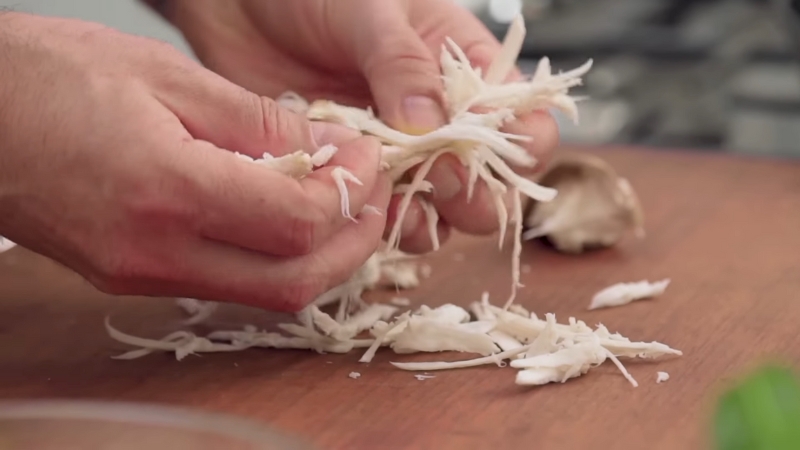
Pulling king oyster mushrooms into strands creates a texture similar to shredded meat. This works best after partial cooking.
Sear or roast the mushrooms whole or in large pieces first. Once tender, tear them by hand and return them to the heat briefly to brown exposed edges.
This two-stage method prevents dryness and keeps the interior juicy.
Common Mistakes That Ruin King Oyster Mushrooms
Most texture problems come from the same few errors.
Mistake
Result
Low heat
Spongy interior
Early salting
Water release
Too much oil
Greasy surface
Constant stirring
No browning
If mushrooms are not browning, the solution is almost always more heat and less movement.
Final Thought
@wellseasonedstudio When I worked in restaurants, I cooked King oyster mushrooms every single day. The dish was a mushroom carpaccio with a jalapeño dressing (I can still smell the sauce even a decade later…!), but here they’re pan seared with a little butter and fresh herbs. Love these as a meatless main. Perfect over creamy polenta! Ingredients: 1 lb King oyster mushrooms 3 Tbsp neutral oil 2 Tbsp unsalted butter Fresh herb suggestions: thyme, sage, rosemary 2 garlic cloves, smashed Flaky sea salt Here’s how to make them: 1. SCORE THE MUSHROOMS. Cut each mushroom lengthwise down the center, then use a paring knife to score in a crosshatch pattern. 2. PAN SEAR. Heat a large stainless steel skillet over medium-high. When hot, add 2-3 Tbsp neutral oil. Add the mushrooms cut side down, then cook undisturbed until golden browned, about 4-5 minutes. If you have a fish weight or sandwich press, it can be helpful to weigh down the mushrooms. 3. FLIP. Carefully flip each mushroom over, add about 2 Tbsp butter to the pan, any fresh herbs or sliced garlic, then cook for another 1-2 minutes. Enjoy immediately with a sprinkle of flaky sea salt! #mushrooms #vegetarian #easyrecipe ♬ apart of me – Takayoshi
King oyster mushrooms reward confidence in heat and restraint in seasoning. Whether pan-seared grilled, or roasted, they perform best when given space, time, and respect for their structure.
Cook them like a protein, not a side vegetable, and they consistently deliver a rich, satisfying result.

Hello, my name is Marina Vlasov. Im currently trying to change my career from my current job to becoming a chef. It is a hard road, but I feel like im coming there soon. While I enjoy preparing practically all food, from various cuisines from all over the globe, I must say that I mostly enjoy preparing vegan food. That is my strongest side. That is why I want to provide you with the best vegan food recipes on this blog of mine.