
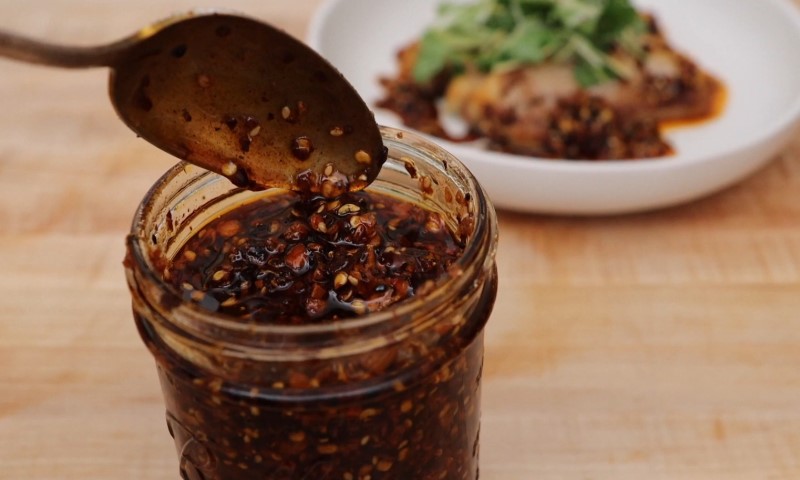
How to Make Crispy Garlic Chili Oil at Home
Crispy Garlic Chili Oil is a bold, aromatic condiment that adds heat, crunch, and deep umami flavor to almost anything.
Of course, the homemade version is fresher, more customizable, and more fragrant than store-bought options.
Drizzle it over noodles, dumplings, eggs, pizza, rice bowls, or even roasted vegetables for an instant flavor upgrade.
Let’s take a look at the recipe for crispy garlic chili oil up close.
| Nutrient | Amount (Per Serving – 1 tbsp / ~15g) |
| Calories | 120 kcal |
| Carbohydrates | 2 g |
| Protein | 1 g |
| Fat | 13 g |
| Saturated Fat | 2 g |
| Polyunsaturated Fat | 4 g |
| Monounsaturated Fat | 7 g |
| Trans Fat | 0 g |
| Cholesterol | 0 mg |
| Sodium | 180 mg |
| Potassium | 45 mg |
| Fiber | 0.5 g |
| Sugar | 0.5 g |
| Vitamin A | 120 IU |
| Vitamin C | 1 mg |
| Calcium | 12 mg |
| Iron | 0.6 mg |
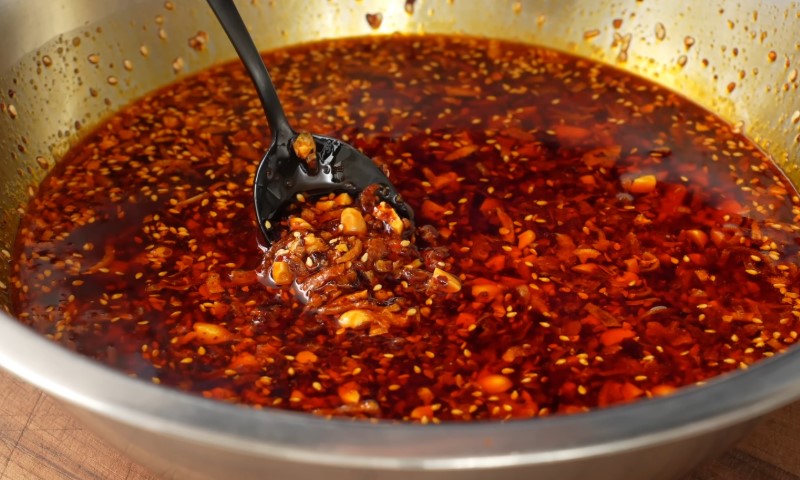
Crispy Garlic Chili Oil
Equipment
- Small saucepan or skillet – to heat and infuse the oil
- Heatproof bowl – glass or stainless steel, to mix chili base
- Fine mesh strainer – for smoother texture (optional)
- Wooden spoon or heat-resistant spatula – to stir garlic while frying
- Measuring cups and spoons – for accuracy
Ingredients
- 1 cup neutral oil (canola, vegetable, or peanut oil)
- ¼ cup garlic cloves, finely minced
- 2 tbsp dried chili flakes (adjust to taste)
- 1 tbsp soy sauce
- 1 tsp sugar
- ½ tsp salt
- ½ tsp smoked paprika (optional)
- ½ tsp ground Sichuan peppercorns (optional)
- 1 small cinnamon stick (optional)
- 1 star anise (optional)
Instructions
1. Prepare the Ingredients
Finely mince the garlic and portion out the remaining ingredients. Place the chili flakes, sugar, salt, smoked paprika, and Sichuan peppercorns in a heatproof bowl.
2. Heat the Oil
Pour the neutral oil into a small saucepan or skillet. Heat it over medium-low until it reaches around 325°F—hot but not smoking.
3. Fry the Garlic
Add the minced garlic to the hot oil. Stir continuously for 3–5 minutes until it becomes golden and crispy. Be careful not to burn it.
4. Prepare the Chili Base
In your heatproof bowl with the chili mixture, get ready to pour the hot oil directly over the ingredients to bloom the spices.
5. Season
Add the soy sauce and mix well to balance the heat with umami and saltiness.
6. Cool and Store
Let the oil cool completely. Then transfer it to a clean, airtight jar and refrigerate. It will stay fresh for up to 1 month.
Video
Notes
Cooking Tips
- Garlic Control: Don’t walk away while frying the garlic—once it turns golden, remove from heat quickly to avoid bitterness.
- Spice Adjustment: Feel free to use milder chili flakes or reduce quantity for a less spicy version.
- Extra Crunch: Add fried shallots or toasted sesame seeds after the oil cools for added texture.
- Oil Choice: Use neutral oil with a high smoke point to avoid overpowering the aromatics.
Alternative Ingredients for the Chili Oil
Alternative ingredients allow crispy garlic chili oil to adapt to dietary needs, flavor preferences, or ingredient availability.
Oil choice plays a major role in aroma and mouthfeel, while add-ins adjust heat, sweetness, and depth.
Swapping components thoughtfully keeps the condiment effective without sacrificing balance or texture.
Oil substitutions are often the first adjustment, especially for cooks seeking different flavor profiles or higher smoke points. Each option changes how garlic fries and how chili aromas carry across dishes.
For optimal frying results when preparing the chili oil, using a reliable pan like a Pyrex frying pan can help you achieve even heat distribution and easy cleanup
Common replacements worth considering include:
- Avocado oil for a cleaner taste and high heat tolerance
- Grapeseed oil for a light finish that lets garlic and chili dominate
- Light olive oil for a subtle fruity note suited to vegetables and eggs
Chili elements can also shift based on spice tolerance or regional availability. Dried chilies influence not only heat level but also color and aroma.
Using alternatives works well when aiming for milder warmth or smokier notes, as shown in options below:
- Gochugaru for gentle heat and natural sweetness
- Aleppo pepper flakes for mild spice with rounded flavor
- Crushed dried red chilies mixed with paprika for controlled intensity
Garlic alternatives and supporting aromatics help adjust texture and sharpness. Some cooks prefer less bite or added crunch, making substitutions useful in everyday cooking.
Ingredient swaps that maintain balance include:
- Shallots sliced thin for softer sweetness
- Fried onions for extra crunch with lower sharpness
- Ginger slices added during oil heating for warm aromatic notes
Sweeteners and seasonings can also shift based on pantry needs or dietary goals. Sugar, soy sauce, or salt levels remain adjustable, ensuring chili oil stays versatile and adaptable across many dishes.
What Dishes Would Benefit From Adding Crispy Garlic Chili Oil
Crispy garlic chili oil works best in foods that welcome heat, texture, and aromatic depth.
Noodle dishes, in particular, gain instant intensity because hot oil coats strands evenly while crispy garlic adds contrast to soft components.
A single spoonful can shift a simple bowl into something far more satisfying, especially when paired with sauces that already lean savory or umami-forward.
Common noodle-based uses include the following additions integrated directly into the dish during finishing:
- Wheat noodles tossed with soy sauce or black vinegar
- Rice noodles paired with light broths or dry-style preparations
- Dumplings and wontons served with minimal dipping sauces
Rice-based meals and proteins also respond exceptionally well to crispy garlic chili oil, especially when dishes feel flat or overly mild.
Steamed or plain foods benefit most since oil delivers both seasoning and aroma in one step.
Applications extend across everyday meals where extra crunch and warmth feel appropriate, as shown in practical uses below:
- Steamed white or jasmine rice finished with a drizzle just before serving
- Fried eggs, scrambled eggs, or omelets needing added texture
- Grilled chicken, tofu, or roasted vegetables brushed lightly after cooking
Soups, snacks, and even Western-style comfort foods can also see noticeable improvement when small amounts are used thoughtfully. Chili oil performs best as a finishing element rather than a cooking fat, keeping garlic crisp and chili fragrant while avoiding bitterness.
Summary
Crispy garlic chili oil proves its value as a finishing touch that enhances everyday cooking without demanding major changes to a recipe.
A small amount adds heat, crunch, and aroma in seconds, making even simple meals feel intentional and satisfying.
Versatility remains one of its strongest qualities, working comfortably across cuisines and meal types while staying easy to control in intensity.
Keeping a jar on hand encourages creativity at the table, allowing flavors to be adjusted right before serving rather than locked in during cooking. Used thoughtfully, crispy garlic chili oil becomes less of a condiment and more of a reliable flavor tool that earns its place in regular rotation.

Hello, my name is Marina Vlasov. Im currently trying to change my career from my current job to becoming a chef. It is a hard road, but I feel like im coming there soon. While I enjoy preparing practically all food, from various cuisines from all over the globe, I must say that I mostly enjoy preparing vegan food. That is my strongest side. That is why I want to provide you with the best vegan food recipes on this blog of mine.